

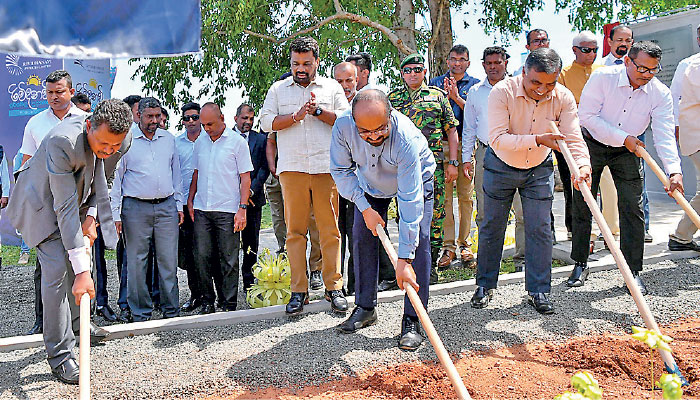
The government begins construction on the $140 million Rividanavi solar power facility
- Technology
Proudly Srilankan
- 0
- 3 minutes read

On 6.9.25 (Saturday), President Anura Kumara Disanayake officially opened the “Rividanavi” Solar Power Park, the nation’s largest renewable energy project, which was valued at $140 million, in Kotiyagala, Monaragala District. The facility, which aims to generate 100 MW of clean energy, is part of the country’s target to achieve 70% of electricity consumption from renewable sources by 2030. The project is expected to save Rs. 21 billion in foreign exchange annually through reduced diesel imports and to lower CO2 emissions by about 150,000 metric tons. It also includes significant infrastructure developments, such as 12 MWh battery storage and a new 132 kV transmission line, to enhance grid stability and energy independence. Several community welfare initiatives and educational programs have been integrated into the project, showcasing a commitment to regional development.
- The Rividanavi project shows how strategic investments in renewable energy can align economic benefits with environmental goals, thus reinforcing the viability of sustainable practices in national policy.
- Implementations like battery storage systems provide a practical solution for renewable energy’s intermittent nature, essential for maintaining grid integrity and reliability.
- The collaboration between government and private sectors in executing energy projects underscores the potential for growth via public-private partnerships, which can facilitate infrastructure development more efficiently.
- Community engagement and welfare initiatives integrated into energy projects can substantially enhance public support and improve social conditions, indicating a need to consider human factors in energy transitions.
An important turning point in Sri Lanka’s energy strategy toward sustainability and independence has been marked with the unveiling of the Rividanavi Solar Power Plant. By making such a large investment, the government is not only putting environmental sustainability first but also boosting the economy by creating jobs and lowering import prices. As work moves closer to its 2027 completion date, this project not only seeks to sustainably meet energy needs but also serves as an example of how cooperative endeavors may spur national development. All things considered, the project serves as an example of how renewable energy may significantly contribute to the socioeconomic improvement of local communities.